








2Laboratory of Process Engineering and Environment University Hassan II Casablanca, Casablanca 20700, Morocco
3Laboratory of Process Engineering and Environment University Hassan II Casablanca, Casablanca 20700, Morocco
4Laboratory of Process Engineering and Environment University Hassan II Casablanca, Casablanca 20700, Morocco

Abstract
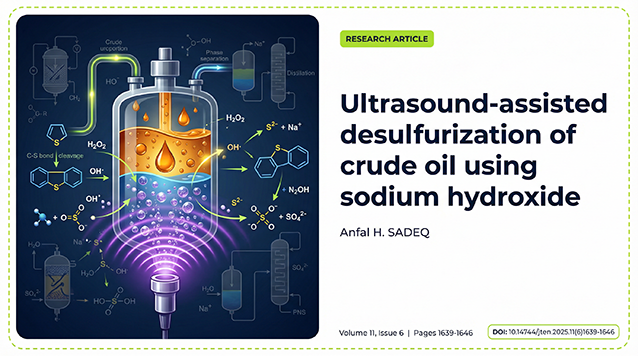
This work aims to use ultrasound as a heating and stirring device, and its primary aim is to study the control of the operating temperature of an ultrasonic bath for various laboratory experiments in which temperature control is crucial. The combined effects of operating time (30-90 min), ultrasonic power (55-550 W) and frequency (35-130 kHz) on temperature control were systematically analyzed using a 23 full factorial design. The experimental data were used to develop a highly correct predictive model (R² = 0.999936) for effective temperature control across the studied parameter space. The simplified model is also included as a practical tool for controlling temperature during ultrasonic treatments. Moreover, the best conditions for stabilizing the temperature were found to be 30 minutes, 55 watts, and 130 kHz, which provided a stable and reproducible ultrasonic bath temperature. Such improvements provide a significant advantage over conventional temperature-control methods and open the door to potential applications in areas where correct temperature control is critical, such as sample preparation, analytical chemistry, quality control, and biotechnology. This work presents the first statistically optimized approach to ultrasonic bath temperature control.